|
Contentious Mattachine Society Leader Felled By Lung Failure
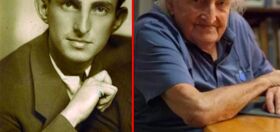
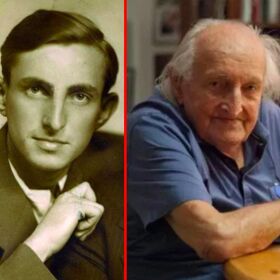
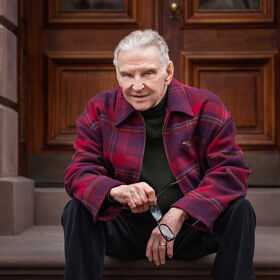
No doubt all of our lives would be different without Kennith H. Burns, one of the founding members of the Mattachine Society: the United States' first gay rights movement. The 81-year old died of lung failure in California last month. A controversial figure in the movement, Burns is credited with moving the Society toward the center: Burns was a founding member of the Mattachine Society, which was founded in Los Angeles in 1950 by activist Harry Hay and others. Though he later stepped down from the Mattachine Society, Burns continued to work with GLAAD and LA's LGBT Center. |
|
50th Anniversary Of Gay Supreme Court Win!
Today marks a very important milestone in LGBT history. Fifty years ago today, on January 13, 1958, the U.S. Supreme Court delivered its first ever pro-gay ruling in ONE Inc. v. Olesen, a landmark decision that allowed a magazine for gays and lesbians to be sent through the U.S. mail. Good thing, too, because otherwise we'd be out of a job! |
|
And His Boyfriend, Too!
"Hadrian was gay, and we can say it," said Thorsten Opper, a British Museum curator of Greek and Roman sculpture, who is publishing a profile of Hadrian to coincide with the show. Hadrian's perhaps most well known for the eponymous wall he built between England and Scotland. The military-minded man also crushed the Jewish revolt of 132 A.D. The British Museum called the exhibit a "chance to write new history". What a queer statement. |
|
|
|
Will Developers Destroy Homo History?
The hotel has been open for over 20 years, and it is the only gay hotel in London which is privately owned by gays and run by gays. Apparently the Princess restaurant will also be destroyed, which would be a real tragedy. If you're inclined to save this gay edifice, join the Save the Philbeach campaign. It's more fashionable than Ron Paul and twice as fun as Edwards. |
|
Queers Span Long, Hard History
The Prague House of Ethnic Minorities currently hosts an exhibition chronicling the nation's queer history. The exhibit, which features pieces from antiquity through the Soviet era and into today, aims to open people's minds about the Republic's lavender-tinged reality. Says Minorities Ministry spokesman Jiri Hromada: "We want to show to the public that gays and lesbians did not fall from the Mars. The older generation used to say there were no homosexuals in its youth." This shit's going to give some old conservative man a stroke. |
|
NBC Newsman Didn't Get Out Enough
Mr. Brokaw’s own history is also part of his panorama. He intersperses autobiographical anecdotes sparingly and chooses them well. He and his wife, Meredith, were married in 1962; girdles were part of her wedding trousseau, and they received five cigarette lighters as presents. Five years later he was in San Francisco being asked, “Mister, do you know what’s going on over on Haight Street?” and meeting a young woman who claimed to have slept with all of the Byrds. Poor Tom Brokaw: can you imagine a life lived without getting down with the gays. Sad… |
|
Private Lives Become Public Record
In an effort to chronicle queer American history, Eureka Valley/Harvey Milk Memorial Branch Library archivist Susan Goldstein asked gays, lesbians and trans folk to contribute their own personal photos, which will become part of the library's permanent collection. Of her mission, Goldstein says, We're getting the photos, and we're getting the history," said city archivist Susan Goldstein. "We're hearing: 'This is my family. They didn't talk to me because I was gay'; 'This is when I was in the military'; 'This is when I came to San Francisco.' It's a great cross section. Not to be confused with a cross-dressing session, of course. Activist Felizia Elizondo (pictured) submitted pictures of herself from her boyhood days, declaring, "I'm a transsexual woman who had surgery in 1974 to go from male to female. I'm here because I'm a pioneer, a legend and a diva." |
|
Born in Soweto on November 26, 1957, Nkoli felt the pain of racial apartheid early. In an effort to bypass the National Party's pass laws, which dictated where blacks could and could not go, Nkoli famously locked his parents in a closet. That seminal event not only fueled his anti-apartheid politics, but his desire to live as an openly gay man. Nkoli came into his gay self fairly early on. Though the government explicitly prohibited homosexuality, Nkoli's conception of the sexual divisions eschewed traditional definition. Growing up in Soweto - and then Sebokong - Nkoli learned to call homosexuality "sitabane," which translates to hermaphrodite. His sexuality had more to do with gender than actual acts. Perhaps it's the linguistic dissociation which helped him embrace his difference so readily. |
|
• South Korean soccer fans decided to turn themselves into human light emitting diodes. It's incredible. • Harvey Keitel presented Snoop Dogg with his Hip-Hop Honor, saying: "There really is no artist in any discipline, any of the arts, that I would rather give an award to. Your work effects the way young people think. I can’t think of a better honor than that. You deserve it.” There you have it: all artists should stop what they're doing. Snoop's way better than you in every single way. |
|
If you're not familiar with Whitman's life, here's the gist. Born on Long Island in 1819 to a Quaker family, Whitman came of age in Brooklyn. Determined to make a name for himself - and money for his family - a young Whitman took odd jobs assisting lawyers and other high profile professionals. Such a life didn't suit him, however, and Whitman broke away into the world of publishing. In 1831, the then twelve-year old Whitman started as an apprentice at a printing press. This move helped him land jobs at the Long Island Democrat and, eventually, as a journalist in New York City proper. |
|
Renaissance Man Liked Hard Bodies
|
|
Painter Created New Identity, Loved Ladies
Unlike some creative minds, Gluck didn't pick up painting until later in life. Though she had no interest in art, the young artist enrolled in London's St John's Wood School of Art, where she first saw John Singer Sargent's painting of the violinist, Joachim. Inspired beyond believe, Gluck made it her mission to become a painter. Gluck first made an impression in the 1920s, when she first began circulating her portrait and floral prints. Her big break came in 1924 when photographer Emil Otto Hoppé helped Gluck organize a show at the Dorien Gallery. Two years later, the Fine Arts Institute gave Gluck her first solo show. Within a few years, Gluck - who famously hated gendered prefixes - had become a darling of the art world. |
|
Shocking, Right?
• Britney Spears loses kids. (As if you didn't see that one coming.) • Mark Foley scandal still stinking up GOP. • Focus on the Family activist wishes American Psychological Association would be more tolerant of ex-gay therapists. • Cindy Adams does not appreciate foreign people coming to melting pot that is New York. • Wow. The Spice Girls' London concert sold out in 38 seconds. Again: wow. • Ridicule: more powerful than a nuclear bomb? • Scottish and Mexican Anglicans want gay inclusion. • Gay History Project growing. |
|
Poet Played With Gays, Race
Though no one seems to know for sure where the secretive Cullen came to be, we do know his mama birthed him in 1903 and named him Countee LeRoy Porter. That same mama ended up abandoning him, leaving Cullen's grandmother to raise him. The young Cullen attended high school here in New York, where he also met up with some other bold-faced names, like W.E.B. DuBois. DuBois helped the NYU graduate get his start in the poetry business by publishing Cullen's words in The Crisis, DuBois' seminal black magazine. From there, Cullen began circulating his work to Harper's, Century and the National Urban League's Opportunity. Cullen also published a number of collections, such as The Ballad of the Brown Girl and The Medea and Some Other Poems. |
|
Traces Couture Chronology
Barneys' creative director Simon Doonan may be the most analytical and keen queer historian to date: "I think over-the-top dressing began when the gay cavemen got bored and started doing wild head wraps." |